Art for designers · 4 min read · Save to Pinterest
Vintage botanical illustrations: free plates for labels, packaging and posters
Two hundred years ago the best botanical artists drew roses and lilies leaf by leaf for kings and scientists. Today their plates are free, and they make the most beautiful labels.
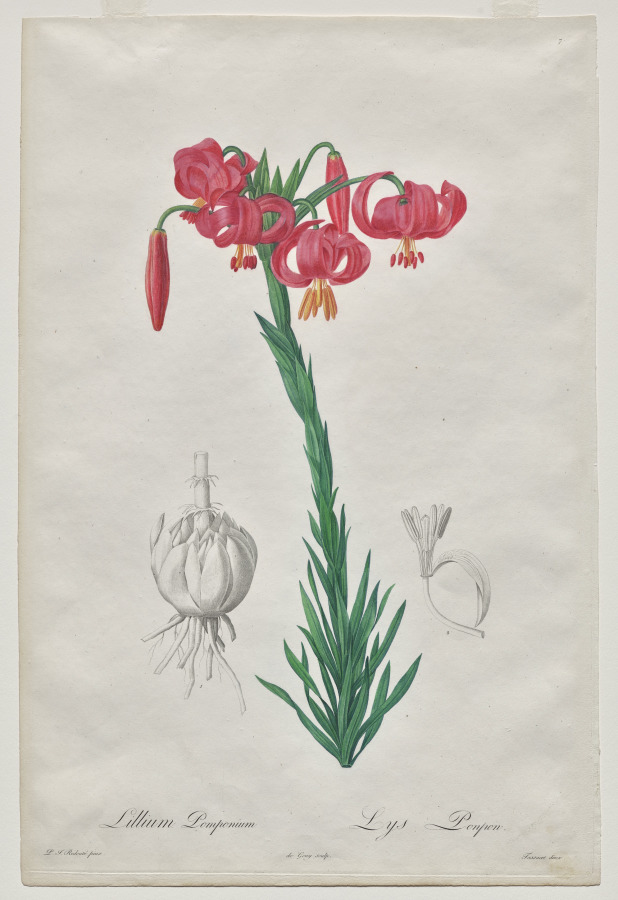
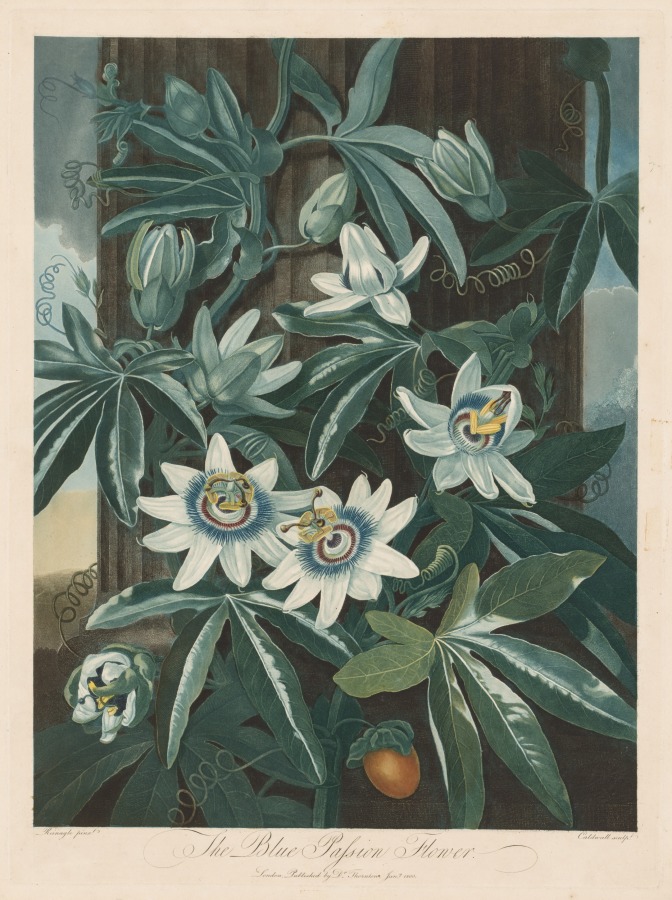
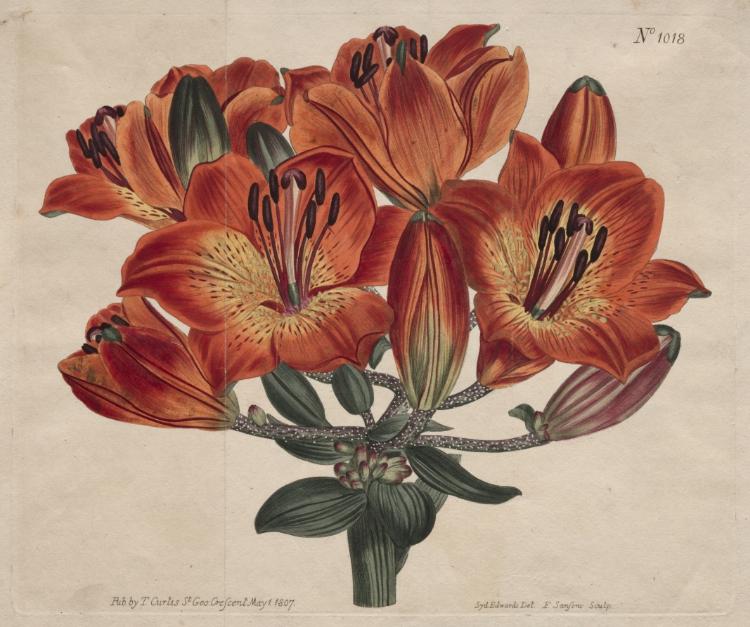
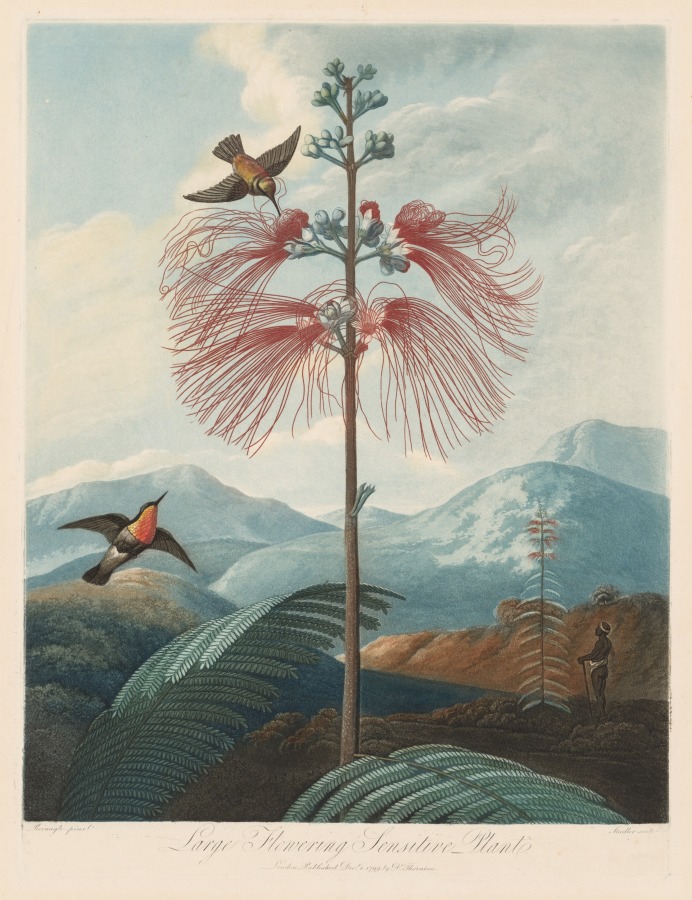
Free vintage botanical illustrations come from museums that mark their prints and drawings public domain or CC0: the Cleveland Museum of Art holds plates by Pierre-Joseph Redouté, Robert Thornton and William Curtis’s Botanical Magazine. In Paletoo, the Art tab’s Botanical chip finds them in one search.
- #4C705D
- #BA5F63
- #6E8B75
- #AC998F
- #D6CFC7
The masters of the botanical plate
- Pierre-Joseph Redouté (1759–1840), “the Raphael of flowers”, painted the roses and lilies of the Empress Joséphine.
- Robert John Thornton published the Temple of Flora (1799–1807): dramatic plants in front of moody landscapes.
- Curtis’s Botanical Magazine, since 1787, the longest-running botanical journal, each plate a new species.
- Earlier flower painters like Ambrosius Bosschaert built bouquets of flowers that never bloomed at the same time — perfect for a rich background.



Where botanical plates work best
| Use | How |
|---|---|
| Tea, cosmetics, candle labels | One plant cut out on a cream label, the name in a classic serif, a thin frame. |
| Wedding invitations | A plate as a full-bleed background at low contrast, the names in a white panel. |
| Posters and prints for sale | A grid of four or six plates on one background colour taken from them. |
| Packaging patterns | Cut the plant out with background removal and repeat it as a pattern. |
| Social posts for a florist or garden | One plant per post, the caption with its Latin name — the feed becomes a herbarium. |
A palette that already looks botanical
Its five colours — found live by Paletoo’s colour engine
- #4C705D
- #BA5F63
- #6E8B75
- #AC998F
- #D6CFC7
Click a colour to copy its code.
Opens a new post with the five colours as colour styles and the work placed from the museum, the Art tab open beside it.
Find botanical plates in Paletoo
- Open Paletoo — free in your browser, no sign-up — and start any document.
- Click Place an image in the toolbar and choose the Art tab (or press ⌘K / Ctrl K and type Search art…).
- Type an artist, a title or a subject; the chips narrow it to Painting, Prints, Botanical, Japan, Maps or Photos.
- Click a work to place it at the museum’s full size; its credit stays with the layer, ready for your caption.
Turn on the Botanical chip and type a plant (rose, lily, tulip, fern, mushroom) or a maker (Redouté, Merian, Thornton). For the palettes of these plates and many others, see palette from a painting.
Questions
Where can I find free vintage botanical illustrations?
In the open-access collections of museums: the Cleveland Museum of Art, the Met, the Wellcome Collection and Wikimedia Commons all offer public-domain botanical prints. Paletoo’s Art tab searches them at once with its Botanical chip.
Are Redouté’s roses public domain?
Yes. Redouté died in 1840. The museum prints of his plates shown here are marked CC0, so you can use them on products you sell.
Can I use botanical illustrations on products I sell?
Yes, if the museum marks the image CC0 or public domain. Many sellers use them on tea tins, candles and prints. Avoid modern botanical drawings unless their licence says so.
How do I remove the old paper background from a plate?
Place the plate in Paletoo and use Remove background on it; the drawing becomes a cut-out you can recolour, repeat as a pattern or put on any colour.
The works on this page
Every picture is the museum’s own file, shown from its site at the size this page needs. The institutions mark each one public domain or CC0 on its record; this is how they ask to be credited.
- The Cleveland Museum of Art, Nancy F. and Joseph P. Keithley Collection Gift — clevelandart.org
- The Cleveland Museum of Art, Gift in the name of Warren H. Corning from his wife and children — clevelandart.org
- The Cleveland Museum of Art, Gift of The Print Club of Cleveland, for the Donald Gray Memorial Collection — clevelandart.org
- The Cleveland Museum of Art, Gift of Mrs. A. B. Leavelle, Stanford, Cal., in memory of her mother, Wilma Ball Morgan (Mrs. Daniel E. Morgan) — clevelandart.org
- The Cleveland Museum of Art, Gift of The Print Club of Cleveland in honor of Mrs. William G. Mather — clevelandart.org
- The Cleveland Museum of Art, Gift of Carrie Moss Halle in memory of Salmon Portland Halle — clevelandart.org
- Art Institute of Chicago, Purchased with funds provided by Natalie Henry — www.artic.edu
More art for designers

Free art for commercial use: a million museum works, and how to use them safely
Great museums give away high-resolution files of works whose copyright has ended. Here is where they are, what the labels mean, and how to put one in your design in a minute.
Art Nouveau posters: Mucha’s grammar for today’s posters and labels
In 1895 an unknown Czech illustrator made a poster for Sarah Bernhardt and Paris queued to tear copies off the walls. His rules still sell perfume, beer and concerts.
Art movements for graphic designers: seven styles, their palettes and a poster for each
Not a history lecture: what makes each style recognisable, the colours its real works use, the type that fits and a poster idea you can start in a minute.
Palette from a masterpiece: pick a painting, get its colours, use them
Old masters solved colour harmony long before colour wheels. Take their answer: five colours from one painting, tested on a poster, opened in your design.
Ukiyo-e for designers: what Hokusai and Hiroshige can teach a poster
Japanese woodblock prints were the posters and magazines of 19th-century Edo. Their rules — flat colour, a bold line, a daring crop — still make the strongest layouts.
Make it: Sticker maker · Invitation maker · Remove background · Templates
Five museums in one search box
Paletoo’s Art tab searches the Art Institute of Chicago, the Met, the Cleveland Museum of Art, SMK, the Wellcome Collection and Wikimedia Commons at once, keeps only what they mark public domain or CC0, and places the work with its credit. Free, in your browser.
Open in Paletoo